.png)
.png)
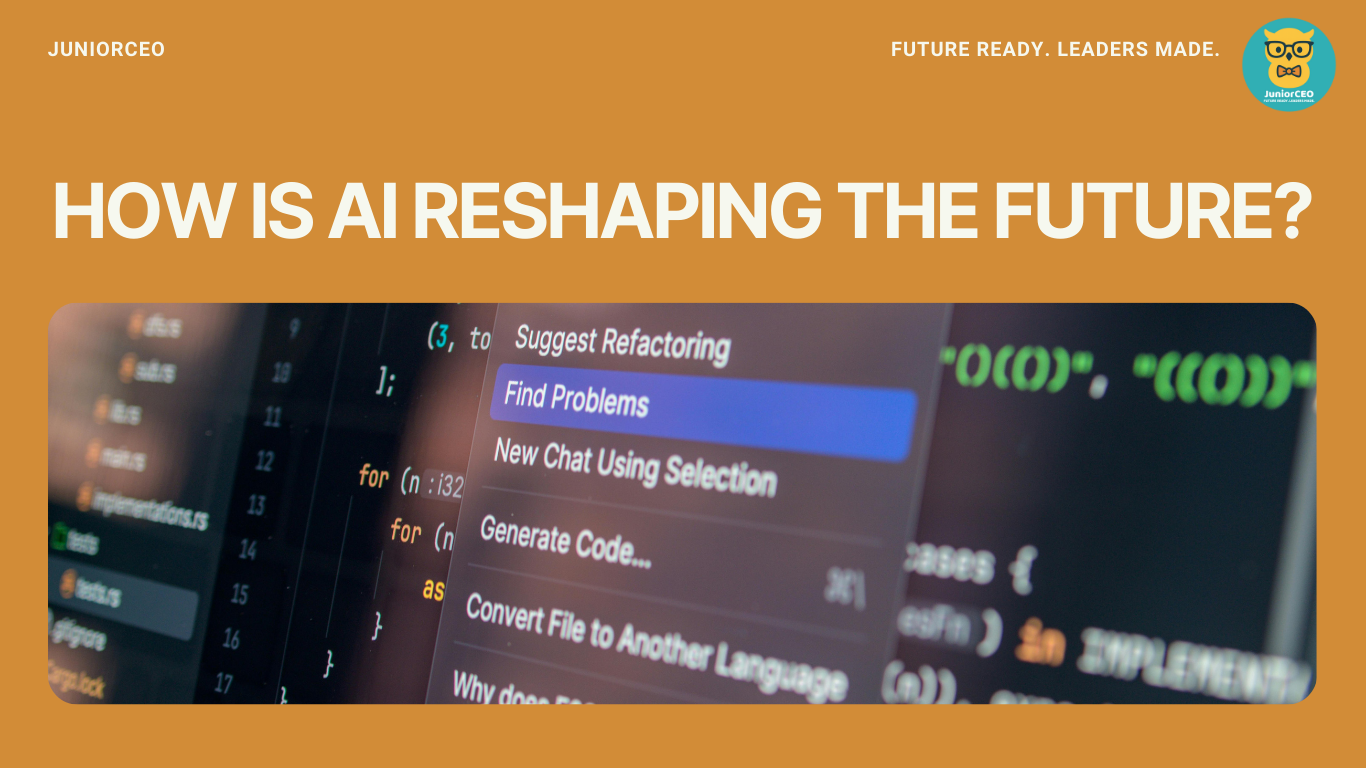
Parents often tell their children to study hard, get good grades, go to a good college and the rest will take care of itself. In the past, that formula led to stable careers and predictable paycheques. But the rapid rise of artificial intelligence (AI) and automation is disrupting this linear path. In 2025 alone, tech giants like Amazon, Meta, Microsoft and Google collectively eliminated more than 100,000 technology‑related jobs while ramping up investments in AI. Even top students and graduates are seeing their jobs shaken by machines, while workers in routine roles are being replaced outright. Grades alone are no longer enough. To thrive in an AI‑driven world, students must develop human skills—creativity, judgment, empathy—that machines cannot easily replicate.
Research from MIT Sloan and the World Economic Forum shows that AI is best at automating routine tasks, not replacing the human qualities that make us uniquely valuable. Tasks that rely on empathy, judgment, ethics and hope are far less likely to be automated. In fact, an international survey found that 83 % of employees believe AI will make uniquely human skills such as empathy, creativity and leadership even more important, and 76 % crave more human connection as AI usage grows. AI frees us to focus on what makes us human—relationships, problem‑solving and imagination—while machines handle repetitive tasks. Employers agree: studies show workers with strong “soft” skills like communication, teamwork and problem‑solving earn higher salaries and are promoted more often than those with technical skills alone. Soft skills are essential for organisational success and resilience.
At JuniorCEO we believe the best way to prepare students is to cultivate mindsets and abilities that machines cannot replicate. Our six pillars provide a framework for turning knowledge into wisdom and action:
JuniorCEO students learn to spot real‑world problems, build simple proposals and turn ideas into practical projects. Whether they dream of launching a café, building an app or starting a social cause, they develop a habit of seeing challenges as opportunities. In the age of AI, creative problem‑solvers stand out because they can imagine new possibilities and act before others do.
Creativity is about combining knowledge and imagination to produce something original. We encourage students to ask “what if…?” and to explore ideas beyond the textbook. AI can generate images and text, but it cannot replace a child’s curiosity, taste or sense of purpose. By practicing design thinking, storytelling andrapid prototyping, our students learn to create from fresh angles.
Instead of fearing technology, we teach kids to use AI as a powerful partner. They learn to leverage new AI softwares and tools such as chatbots, voice generators and video editors to accelerate their work. These skills are accessible even without coding experience—our students quickly discover that AI can help them write scripts, design graphics or perform research, freeing them to focus on higher‑level thinking.
Money smarts are essential for any aspiring young leaders or independent adult. JuniorCEO introduces students to budgeting, pricing, saving and investing in a fun, practical way. For example, we offers personalised spending insights, alerts and coaching on investment concepts. Students will learn how AI can make money management approachable—and how good financial habits create freedom and choices later in life.
Success in high school, college and beyond isn’t just about test scores. Our program guides students to map their strengths to careers they care about, understand requirements and build a plan that stands out, especially for schlorship application. We connect classroom learning to real‑world opportunities, whether it’s a STEM programme, a college application or an internship. A well‑rounded portfolio that showcases projects, leadership roles and personal growth can be the deciding factor for selective high schools and universities, and their future internship, part time opportunities and full time roles.
Experience comes from doing. It is something we will not be able to get from textbooks. That’s why we challenge students to develop projects—from marketing campaigns and community initiatives to prototype products—and organise them into a portfolio. Along the way, they practice communication, teamwork and leadership. Admissions committees and employers value evidence of initiative, collaboration and impact, because these qualities can’t be measured by grades alone.
Our first session, “Why the World Has Changed—and Why Our Learning Must Too,” sets the stage. We ask students to reflect: if AI and machines handle routine tasks, what makes them irreplaceable? We encourage them to see the flaws in the traditional education model—memorisation over problem‑solving, exams rewarding one right answer rather than bold thinking—and to imagine a different path.
From there, each pillar comes alive through hands‑on activities. Students brainstorm business ideas, some create simple logos with Canva, some record promotional videos with CapCut, and some generate voice‑overs using ElevenLabs.They build a mini budget using apps like Cleo or Rocket Money, then reflect on what they’ve learned. Worksheets and mentorship sessions encourage them to document their progress, turning class projects into portfolio pieces.
Try out First Session of JUNIORCEO for Free NOW! Limited Offer ONLY!
The world is moving fast, but the skills our children need have more to do with being human than competing with machines. Employers and colleges are looking for communicators, critical thinkers, leaders and innovators. MIT researchers found that tasks requiring empathy, creativity ande thical judgment are less likely to be automated. Workday’s global study reveals that employees expect AI to increase the importance of uniquely human skills.
In other words, AI isn’t replacing your child; it’s amplifying the value of their emotional intelligence and imagination.
At JuniorCEO, we don’t ask kids to choose between science, technology, engineering and mathematics (STEM) and the arts. Instead, we help them blend STEM knowledge with creativity, entrepreneurial thinking and people skills. Whether a student dreams of a career in engineering, medicine, design or business, they will need the resilience and resourcefulness that come from our six pillars.
AI tools are becoming more powerful every day, but they remain tools for our future leaders. The real differentiator is how we use them—and that comes down to mindset, curiosity and courage. When students learn to think like entrepreneurs, create with purpose, collaborate across disciplines and manage money wisely, they become future‑proof. They are ready not only for today’s high school and college applications but also for tomorrow’s careers and new innovations.
Your child deserves an education that goes beyond memorising facts. By joining JuniorCEO, they’ll develop the skills to thrive in an AI age, build a portfolio that tells their unique story and discover that AI won’t replace them - it will empower them.
Jenkin Tse
Serial Entrepreneur, Founder of JuniorCEO

.png)
.png)
.png)
.png)
.png)
.png)
.png)
.png)
.png)
.png)
.png)
.png)