.png)
.png)
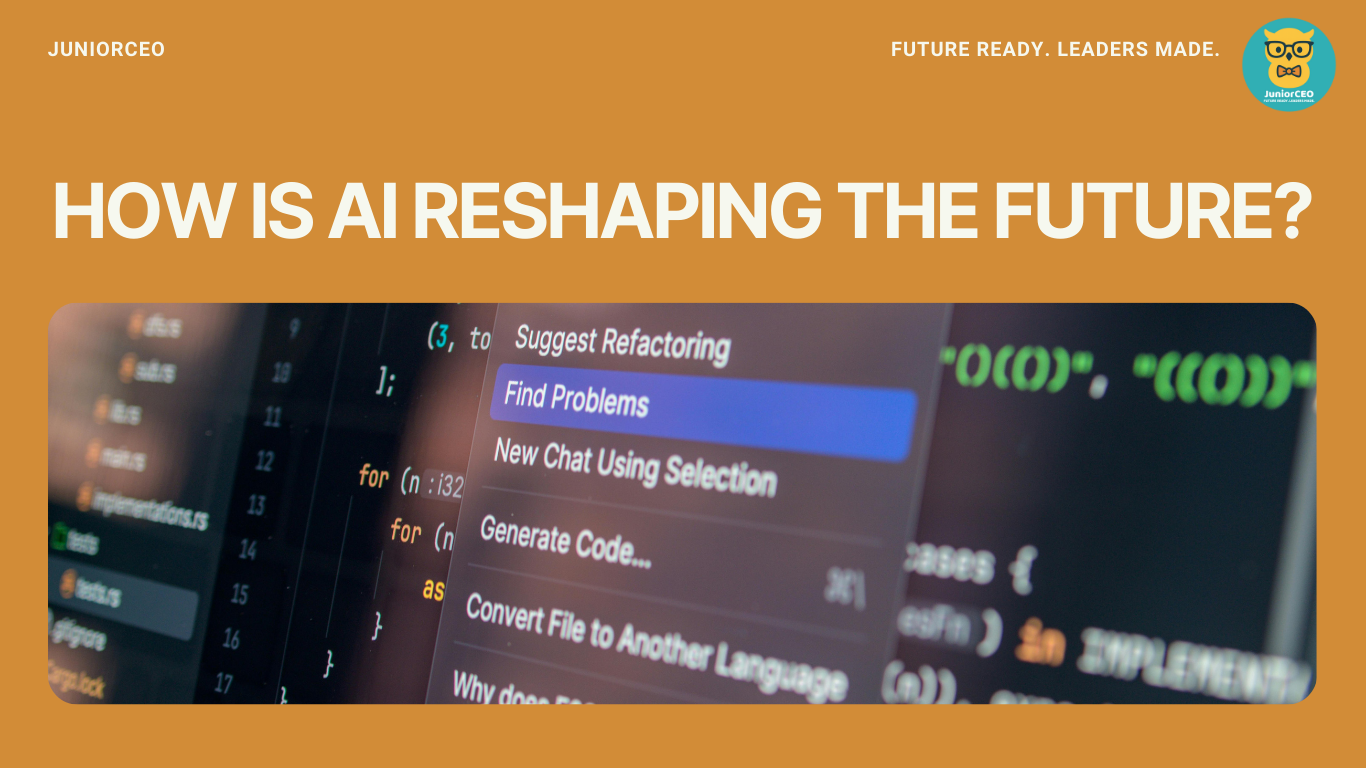
Parents today often worry about how artificial intelligence (AI) might affect their children’s future careers. Automation is no longer a distant sci-fi concept – it’s happening now, reshaping workplaces around the world. In fact, more than a quarter of jobs in advanced economies involve skills that AI could automate, and three in five workers worry their jobs could be taken over by AI in the next decade. Across Asia in particular, companies are rapidly adopting AI and robotics; 73% of all new industrial robots in 2022 were installed in Asia, leading the charge in automation. This brings us to the big question: with AI replacing so many roles, will entrepreneurs be among them? Let’s explore which jobs are being taken over by AI, why successful entrepreneurs are unlikely to be replaced, and how nurturing an entrepreneurial mindset in our kids (ages 6–18) can prepare them to thrive in a changing world.
AI tends to excel at tasks that are routine, repetitive, or data-driven – and we’re seeing it swiftly move into such roles. Here are some of the top jobs being automated by AI today, along with real examples (many from Asia) of this trend in action:
It’s important to note that automation often targets the routine parts of jobs first. Many of the above roles – answering the same questions, performing repetitive assembly steps, reading scripted news – are built on predictable routines. AI and robots thrive on consistency. That said, completely eliminating humans isn’t always the immediate outcome; sometimes AI works alongside people to handle the heavy lifting or grunt work, while people focus on more complex duties. For example, the TV channel that introduced AI anchor Lisa said the goal was to let the AI handle repetitive bulletins so that “newspeople can focus on new angles and more creative work.”In many fields, we’ll see AI augmented jobs (where humans plus AI together are more effective) even as pure AI-only positions also emerge.

With so many professions changing, it’s natural to wonder if “entrepreneur” could ever be an endangered job. After all, entrepreneurs often wear many hats – might AI take over those functions? The heartening answer is no: entrepreneurs are least likely to be replaced by AI. In fact, the rise of AI makes human entrepreneurship and leadership more important. Here’s why:
Entrepreneurship relies on uniquely human traits that AI, for all its power, cannot truly replicate. According to the World Economic Forum, AI is unlikely to replace jobs that require human judgment, creativity, and emotional intelligence. By definition, a successful entrepreneur uses exactly those abilities: they imagine innovative products or business models (creativity), make complex decisions in uncertain situations (judgment), and inspire teams, investors, and customers through vision and empathy (social/emotional intelligence). These are not rote tasks – they’re complex, deeply human activities. AI algorithms excel at analyzing data and optimizing within set parameters, but they don’t possess imagination, personal charisma, or the ability to understand nuanced human motivations. As one business leadership expert put it, traits like creativity, empathy, curiosity and ethical leadership are “the true competitive edge in an AI-driven world” because machines can’t replicate.
Think of the entrepreneur as the architect and AI as a very smart power tool. An architect conceives an original design and oversees the project; the power tool helps execute specific tasks faster. Likewise, an entrepreneur might use AI to crunch numbers, generate a quick marketing draft, or A/B test ideas – but it’s the entrepreneur who formulates the business vision, draws inspiration from personal experiences, understands what customers really need, and pivots when the market changes. Those higher-level leadership and creative tasks are far beyond what any AI can do independently. We don’t see AI starting successful new companies on its own; rather, we see entrepreneurs using AI to supercharge their own capabilities. (More on that in a moment.)
Moreover, entrepreneurship is intertwined with human values and relationships. A good founder motivates employees, builds partnerships, and wins over customers by understanding their problems. AI might analyze customer data, but it can’t personally lead a team or build trust in the same way a human can. Emotional intelligence – the ability to network, negotiate, mentor, and rally people around an idea – remains a core entrepreneurial skill that machines don’t possess. As long as people are at the center of businesses (as employees, customers, and stakeholders), we will need entrepreneurs who can connect with those people. In short, entrepreneurs are safe from being replaced. On the contrary, in an age where routine work is automated, the economy will need more creative entrepreneurs to generate the next wave of jobs and innovations that AI alone couldn’t imagine.
Instead of fearing replacement, many entrepreneurs (including small business owners) are embracing AI as a powerful tool to grow their businesses. AI can handle tedious tasks and provide insights, essentially acting like a force-multiplier for a resourceful founder. A recent survey of over 2,000 small businesses in the U.S. found that 68% now use AI regularly in their operations – double the share from just a year before – and 74% of these companies say AI is boosting their productivity. In other words, the majority of entrepreneurs are already leveraging AI to accomplish more with less, not to cut out the human element.
What are they using AI for? The same survey shows top uses include marketing, customer service, administration, and data analysis. For example, AI tools can automatically write social media posts or product descriptions (saving creative teams time), answer basic customer questions via chat 24/7, or analyze sales trends to help a founder make better strategy decisions. Nearly 41% of small businesses using AI report an increase in revenue as a result – because AI helped them reach more customers or operate more efficiently. This goes to show that entrepreneurs who harness AI can gain an edge over those who don’t. As one report noted, these technologies “level the playing field” by giving small firms access to analytics and capabilities once only available to big corporations. In Asia too, we see startups using AI in savvy ways. Some e-commerce entrepreneurs use AI-driven chatbots on platforms like WhatsApp or WeChat to handle customer inquiries, while others employ AI to optimize delivery routes or personalize product recommendations just like a large tech company would.
The key takeaway for our kids is that AI is a tool for entrepreneurs, not a replacement. An entrepreneurial mind sees AI as an opportunity: How can I use this to solve a problem or scale up faster? We’ve already seen new ventures where founders build their entire product on AI (for instance, developing an AI app or using AI to deliver a service better than competitors). Many of tomorrow’s jobs will actually be in creating or managing AI solutions – an inherently entrepreneurial endeavor. Even outside the tech sector, a young entrepreneur might use AI to automate the boring parts of running a business (like bookkeeping or scheduling), freeing up more time to focus on innovation and growth. This symbiotic relationship is summed up well by a tech entrepreneur who said: “AI won’t replace entrepreneurs. But entrepreneurs who use AI may replace those who don’t.” In short, those who learn to ride the wave of new technology will surge ahead, and teaching our children to have that adaptive, innovative mindset is crucial.

You may have heard economists talk about a “K-shaped” economy or recovery. This term describes how different groups of people or industries are experiencing growth at drastically different rates – like the two arms of the letter "K," one going up and one going down. In practical terms, a K-shaped economy means there’s a widening gap between the so-called winners and losers in the society. For example, high-income earners and certain tech-driven companies are thriving, while lower-income workers and traditional sectors are struggling. During the pandemic recovery, we saw this pattern: professionals who could work with digital tools surged ahead, whereas people in jobs that could be automated or that depended on old ways were hit hard.
What determines who ends up on the upper vs. lower leg of the “K”? Skills and adaptability. In this new economy, simply doing things “the way they’ve always been done” can lead to stagnation or decline, especially if those tasks can be done by machines. On the other hand, those who can innovate, learn new skills, and drive change will ride upward. One analysis of global labor trends found that high-skill, innovation-driven roles (like software development, digital marketing, AI, etc.) are soaring in demand, while many middle-skill jobs (like routine office support or assembly line work) are being “steadily eroded by automation". It’s a dual-speed situation: one group moves up through innovation and education, while another group falls behind with job insecurity. This is exactly why fostering entrepreneurial skills in young people can help them stay on the upper track of that K-shaped split.
By teaching our children to be entrepreneurial – to be creative problem-solvers, opportunity-seekers, and adaptable learners – we give them the tools to remain relevant and successful no matter how technology shifts the landscape. Entrepreneurial thinking ensures your child can create value in new situations, rather than being rendered obsolete by a change. In a world where, as the World Economic Forum notes, about 39% of core skills may need to change by 2027 to meet the demands of future jobs, having a mindset of “I can learn, I can invent, I can collaborate, I can lead” is like an insurance policy for one’s career. Those are precisely the attitudes that keep people on the rising side of the economy. And even if a certain industry declines, an entrepreneurial person can pivot to new ideas (think of all the businesses that switched to online models during COVID, guided by entrepreneurial leaders). In short, the best way to future-proof our kids is to cultivate their ability to think and act like entrepreneurs – resilient, creative, and always ready to learn something new. This will help them not only avoid being left behind by automation, but actually drive the next wave of progress.
.png)
Encouraging an entrepreneurial mindset in kids isn’t about turning them into business owners overnight. It’s about instilling life skills and attitudes that will help them succeed in any path they choose. Here are some clear benefits of nurturing entrepreneurial thinking in children and teens:
These benefits show that entrepreneurial thinking is not just about business – it’s about personal development. By encouraging these traits at home and in school, parents and educators can help children grow into well-rounded, capable young adults ready for the future. As one school entrepreneurship program put it, such education “prepares students for an uncertain future” by teaching them collaboration, problem-solving, empathy and how to learn from failure. Isn’t that what we ultimately want for our kids?
Try out First Session of JUNIORCEO for Free NOW! Limited Offer ONLY!
As AI and automation continue to reshape the job market, the human qualities of creativity, leadership, and adaptability become all the more vital. The rise of AI is not a doom-and-gloom story for our children – it’s a wake-up call to focus on what makes them uniquely human and uniquely capable. Entrepreneurs are living proof that with the right mindset and skills, technology is a partner, not a threat. They show us that innovation creates new opportunities even as old ones change.
For parents of 6–18 year olds, the message is encouraging and empowering: by investing in your child’s entrepreneurial skills and spirit, you’re giving them the tools to thrive no matter how the world evolves. At JuniorCEO, we encourage students to be curious problem-solvers. Let them tinker, start passion projects, or even small businesses like a lemonade stand or an online craft shop. Support schools and programs that teach entrepreneurship, teamwork, and creative technology use. These experiences will help your child develop resilience, confidence and a vision for their future.
Most importantly, at JuniorCEO, we remind your children that their potential is not limited by what machines can do. On the contrary, with a strong entrepreneurial mindset, they can leverage machines to achieve even greater things. Our students could be the founders of the next groundbreaking startups, the social entrepreneurs solving global challenges, or the dynamic leaders who deploy AI for good. By nurturing their ability to think entrepreneurially, we prepare them not just to cope with the future, but to shape it. And as they pursue their ideas and dreams, they won’t just be securing their own place on the top curve of that K-shaped economy – they’ll be ready to create their own future and maybe even change the world
In the end, no AI can replace the heart, imagination, and drive of a passionate human entrepreneur. So let’s raise our children to embrace those qualities. The future belongs to the innovators!
Jenkin Tse
Serial Entrepreneur, Founder of JuniorCEO

.png)
.png)
.png)
.png)
.png)
.png)
.png)
.png)
.png)
.png)
.png)